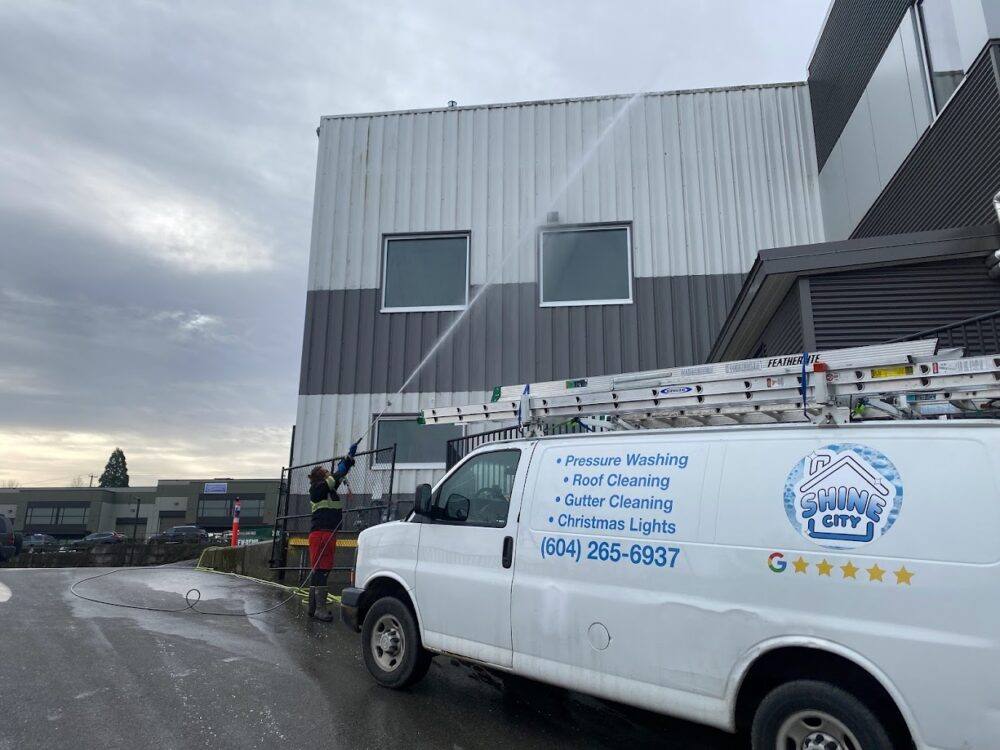
House washing is usually priced per house by size and storeys, by the square foot of wall, or by the hour, always with a minimum. Whichever way you quote, check it against the real cost of the job.
Pressure washing or soft washing a house
When owners ask how much to charge to pressure wash a house, they are often pricing a soft wash. A soft wash uses low pressure and a cleaning mix that kills the mold, algae and mildew on the siding. The mix does the work. The water just puts it on and rinses it off.
High pressure is for concrete, not siding. On vinyl, stucco, painted wood or old mortar, it can force water behind the wall, strip paint or leave marks. One damage claim can cost more than the whole job.
For pricing, the method is the same either way. What changes is the cost of the mix, how long it has to sit, and how careful the crew must be. A soft wash usually has a higher material cost and less time spraying. A pressure wash of a brick or concrete wall is often the opposite.
Three ways to price a house wash
- Per house, by size and storeys. You build a small price grid: one-storey, two-storey and three-storey, each in a few size bands. This is the easiest for customers to understand and the fastest to quote.
- Per square foot of wall. You measure the siding area, not the floor area of the home, and multiply by a rate. It is more exact on odd-shaped houses. Tell the customer which area you used, because floor area and wall area are very different numbers.
- Per hour. Use this for very dirty houses, heavy detail, or anything you cannot judge from photos.
Whichever way you quote, test the number. Estimate the crew hours, including drive, loading and setup. Multiply by your crew size and your full cost per person-hour. Add the mix, fuel and vehicle. Divide by one minus your margin. If your grid price is lower than that answer, the grid is wrong for this house. The pressure washing price table shows the same method on driveways, decks and roofs.
What pushes the price of a house wash up or down
- Number of storeys. Each storey adds ladder moves, longer reach and more risk. A three-storey wall often needs extra gear or a second person on the ground.
- Size and shape. Corners, dormers (windows that stick out of the roof), bump-outs and trim all slow the crew down. Two houses with the same floor area can take very different times.
- Siding type. Vinyl is quick to wash. Stucco and rough brick soak up more mix. Painted wood needs a gentle touch. Each one changes your hours and your material cost.
- How dirty it is. A light film of dust washes off fast. Thick green growth on the shady side may need a stronger mix, a longer wait before rinsing and a second pass.
- Access. Steep yards, tight side gaps, fences, decks over a slope and big plants along the wall all add time.
- Water. No working outdoor tap means you bring water. That costs time and money.
The costs that hide inside a house wash
The spraying is only part of the day. These are the pieces owners forget to price.
- The cleaning mix. Work out roughly how much mix a house that size uses, and what that costs you. Price it per job, not as a guess. Dirty houses use more.
- Plant care. Soaking plants before the mix goes on and rinsing them after takes real time. So does moving patio furniture and covering lights and outlets.
- Ladder time. Every ladder move on a two-storey house takes a few minutes. Count them on the walk-around.
- Setup and teardown. Hoses out, pump running, mix loaded, then everything back on the truck.
- Drive time. The drive both ways is paid time, and fuel comes on top.
- Equipment wear. Pumps, hoses, spray tips and the part that feeds the mix into the water all wear out. A share of that belongs in every price.
This is why your hourly number matters so much. Use the full cost of one person-hour, with payroll taxes, insurance and workers' comp, not the wage alone. The labor burden calculator works it out for you.
Set a house wash minimum
A small bungalow still needs the truck loaded, the drive there, the plant soak, the hoses run and the drive home. That block of time is almost the same as on a much bigger house.
Set your minimum by pricing the smallest house you would wash, with the full setup and drive counted. Anything smaller still pays that price. If a customer only wants one wall or the front of the house, the minimum still applies. It is the lowest price at which a trip still pays.
For far-away jobs, raise the price or add a trip charge so the extra drive is covered.
Add-ons: gutters, roof, windows and the driveway
A house wash is a good time to offer more work, because the crew is already there. Price each add-on from the extra hours and materials it really adds.
- Gutter face brightening. This removes the black streaks on the outside face of the gutters, which a normal wash often leaves behind. It takes hand work or a stronger cleaner, so it is extra time.
- Roof soft wash. Price it as its own job. It needs roof safety gear, more mix, a longer wait before rinsing and more insurance risk. Do not throw it in for a small extra amount.
- Window rinse. A rinse after the wash helps the house look finished. Hand-cleaned windows are a different service with their own time.
- Driveway and walkways. The drive and setup are already paid for by the house wash, so this add-on can cost less than a separate visit. Still count the surface cleaner time. See how much to charge for pressure washing a driveway.
How to present a house wash price
Give one clear price for the house, then list each add-on with its own price. The customer can say yes to the main job and pick extras without a second visit.
- Say what is included: all sides, the outside of the gutters or not, windows rinsed or not, plants protected.
- Say what is not: oxidation (the chalky film on old vinyl and aluminum), rust stains, peeling paint and hard water marks. Washing does not fix these, and saying so up front stops arguments later.
- Put the quote in writing and send it the same day while the customer still remembers you. Our guide on how to quote a job professionally covers the layout.
In CrewBrain, the quote goes out from the customer's record, quiet quotes get followed up automatically, and the crew app takes before and after photos so the result speaks for itself.
Mistakes, and when to walk away
- Quoting from the street. Photos of all four sides, or a quick walk-around, catch the back deck, the steep side yard and the green north wall.
- One price for every storey. A two-storey house is not twice the price of a bungalow, but it should cost more.
- Pricing from the wage. The wage leaves out taxes, insurance and equipment wear.
- Confusing margin with markup. Adding 50% to your costs gives a 33% margin, not 50%. See profit margin vs markup.
- Not tracking real hours. If house washes keep running over, your grid is too low.
Say no, or raise the price, when the siding is fragile or failing, when a three-storey wall has no safe way up, when the customer expects washing to remove oxidation or old paint, or when the customer wants a price below your cost and will not move. A higher price covers the risk. A lower one just pays you to take it.
A worked example: a two-storey vinyl-sided house with 2,200 sq ft of floor space, soft washed on all four sides (illustrative numbers)
| Item | How it is worked out | Amount |
|---|---|---|
| Labor | 2 people × 3.75 hours (including drive time) × $28 per hour | $210 |
| Materials | Supplies used on the job | $40 |
| Vehicle and fuel | Truck time and fuel for this job | $45 |
| Job costs | $295 | |
| Price at a 55% margin | $295 ÷ 0.45 | $656 |
| Left after job costs | $656 − $295 | $361 |
Where the price goes in this example
Every dollar of the price, split into the costs it covers and what is left over.
- Labor $210 (32%)
- Materials $40 (6%)
- Vehicle and fuel $45 (7%)
- Left after job costs $361 (55%)
The whole bar is the price the customer pays: $656. Illustrative numbers, built from the table above.
Hourly cost per person is the full cost of one hour, including payroll taxes, insurance, workers' comp and equipment wear, not just the wage. Drive time is counted as paid time for both people, there and back, and on-site hours include setup, plant care and cleanup. These numbers are an illustrative example of the method. They are not a price list, and not a promise of what your jobs will earn.
Try it with your own numbers
Job costs means crew time (with drive time), materials, vehicle and fuel. Hourly cost per person is the full cost of an hour, including payroll taxes and insurance, not just the wage. This is a simple calculator, not a quote.
Built for pressure washing: the pressure washing pricing calculator works from house siding, driveway, patio and walkways, deck and fence, with example speeds you can change to your crew’s.
Keep going
- CrewBrain for pressure washing companies: how the software handles quoting, scheduling and crew time for this trade.
- How much to charge for pressure washing a driveway
- How much to charge for pressure washing: a price table with the math shown
- How to price gutter cleaning jobs so each one makes money
- How to price a service job: the five-step method behind every page in this series.
- Job price calculator: the same calculator as above, on its own page.
- What is a good profit margin for a service business?
- How to estimate labor hours for a job
- All pricing guides by trade
Questions owners ask
How much should I charge to pressure wash a house?
Add up the crew hours (including drive and setup) at the full cost per person-hour, plus the cleaning mix, fuel and vehicle. Divide that by one minus your margin. Then set your price grid by size and storeys so every house clears that number.
Should I charge by the square foot or by the house?
Most owners quote per house using a grid by size and storeys, because it is fast and easy for customers. Per square foot of wall works well on odd-shaped houses. Either way, check the price against the hours the job will really take.
How much more should I charge for a two-storey house?
Charge for the extra time and risk, not a fixed percentage. Count the extra ladder moves, reach and setup on your walk-around, and price those hours at your full hourly cost.
How much should I charge for soft washing compared with pressure washing?
Use the same method for both. A soft wash usually costs more for the cleaning mix and takes a little less time spraying, so the totals can end up close. Price each job from its real costs.
Do I need a minimum charge for house washing?
Yes. Loading, driving, plant care and setup take about the same time on a small house as on a large one. A minimum makes sure the smallest jobs still cover that fixed time.
Should a roof wash be included in the house wash price?
No. A roof soft wash needs safety gear and more mix, and it carries more risk, so price it as its own job or a clearly listed add-on.